
Magic truffles contain the same active ingredients as magic mushrooms: psilocybin and psilocin. Depending on their potency, the individual, and the circumstances, they can induce a very powerful psychedelic experience.
So truffles aren’t simply “LSD-light.” They have their own character, pace, and place in the psychedelic landscape. In this article, you’ll learn how magic truffles work, how they differ from magic mushrooms and LSD, and why set and setting are so important.
What exactly are magic truffles?
What we see above ground as a mushroom is only a small part of it. Beneath the ground lives what is known as mycelium: a fine network of fungal threads that grows through the substrate. A mushroom—the visible part—is the fruiting body through which the fungus reproduces.
Some mushrooms can also form sclerotia. This is the mushroom’s food reserve: an underground supply of food for times when conditions are less favorable. It is precisely these sclerotia (this food supply) that we refer to in practice as magic truffles.
So a magic truffle is not a magic mushroom that is kept small and underground using a specific cultivation technique.
Magic truffles are not culinary truffles
Biologically speaking, a magic truffle isn't a real truffle either—unlike the black or white truffles that are shaved over pasta in restaurants. A culinary truffle is the underground fruiting body of other fungal species; a magic truffle is a sclerotium.
The name “truffle,” as a reference to psychedelic truffles, originated because these brown tubercles resemble real (culinary) truffles in appearance and where they grow. This distinction is also recognized legally: sclerotia are neither mushrooms nor culinary truffles in the biological sense.
(text continues below)
Test Your Knowledge of Truffles
Take the truffle quiz and receive a free bag of truffles with your order
Take the Microvibes truffle quiz and find out how much you know about magic truffles. At the end, you'll see your score right away, and a fun little gift will be waiting for you.
What is the difference between truffles and magic mushrooms?
A magic mushroom is the above-ground fruiting body of a psychedelic fungus. A magic truffle is an underground sclerotium of certain psychedelic fungi. Their form and function differ, but from a psychedelic perspective, they come from the same family.
Both magic mushrooms and magic truffles contain psilocybin and psilocin. These are the active compounds that can alter perception, thoughts, emotions, and the experience of time and space. Truffles are therefore not a weaker version of magic mushrooms; what may differ, however, is the amount of active compound.
How does psilocybin work in your body?
From psilocybin to psilocin
Psilocybin is a precursor substance, also known as a prodrug. After ingestion, the body converts psilocybin into psilocin. Psilocin can then reach the brain and binds, among other things, to the 5-HT2A receptor, a serotonin receptor that plays an important role in the effects of psychedelics.
The short version is: truffle → psilocybin → psilocin → psychedelic effects. Colors may seem more intense, patterns may appear to move, music may resonate more deeply, and time may feel different. But a truffle experience is certainly not just about visuals. Thoughts, feelings, and unexpected insights can be just as defining.
Why are magic mushrooms illegal but magic truffles aren't?
Hallucinogenic mushrooms have been banned in the Netherlands since 2008. Magic truffles are not subject to the same ban, because, legally speaking, unprocessed sclerotia are not mushrooms. This isn’t a trick where the same mushroom is simply hidden underground: a sclerotium and a mushroom are biologically two different things.
There is, however, an important distinction. Isolated psilocybin and psilocin are, in fact, listed on Schedule I of the Opium Act. The special legal status therefore applies to unprocessed, fresh sclerotia and does not automatically apply to every extract or processed product containing psilocybin.
As soon as truffles are processed or incorporated into a product (e.g., a chocolate), they fall under the Opium Act. That’s why you generally only find fresh truffles in smart shops and online stores. This is also the case at Microvibes.
Are magic truffles weak?
This is probably the most persistent misconception about magic truffles. Perhaps it stems from their image as a legal “smart shop” product, from cautious first-time experiences, or from the fact that fresh truffles are not the same as dried magic mushrooms on a per-gram basis. But that doesn’t mean truffles can only produce a mild experience.
In controlled studies, sufficiently high doses of psilocybin truffles were found to be comparable to LSD and magic mushrooms in terms of subjective effects. That doesn’t mean that a certain number of grams of fresh truffles is equivalent to a dose of LSD, but it does mean that psilocybin can induce a very powerful psychedelic state. There is such a thing as a mild truffle trip, and there is also such a thing as a intense truffle trip.
How strong are magic truffles?
Why Weight Isn't the Whole Story
Two pieces of truffle of the same weight do not necessarily contain exactly the same amount of psilocybin and psilocin. The type of fungus, genetics, growing conditions, harvest time, storage, and normal biological variation can all affect potency.
How do truffles compare to magic mushrooms?
Fresh magic truffles generally contain less psilocybin per gram than one gram of dried magic mushrooms. Laboratory research shows that, roughly speaking, a few grams of potent fresh truffles may be needed to contain the same amount of active ingredient as one gram of dried Psilocybe cubensis. However, there is no fixed conversion factor: both are natural products, and their potency can vary significantly.
Are truffles stronger these days than they used to be?
Many people feel that way, but there is no comprehensive series of independent laboratory studies in which Dutch magic truffles from different years have been systematically compared. Therefore, we cannot honestly claim that today’s average magic truffle has been proven to be stronger than it used to be.
What we do know is that the potency of truffles can vary significantly, and that today’s selection includes far more potent varieties than in the past. Anyone who has ever written off truffles based on a single mild experience from years ago would do well to give today’s more potent varieties—such as Galindoi, Dragon Eggs, and Utopia truffles—another try.
Magic Truffles vs. LSD: Different, but Not Necessarily Weaker
For someone accustomed to LSD, it’s tempting to rank psychedelics on a single vertical scale: truffles at the bottom, then magic mushrooms, and LSD at the top. But that’s not how it works. LSD and psilocybin are both classic serotonergic psychedelics, but they differ in terms of chemical structure and duration of effect, among other things.
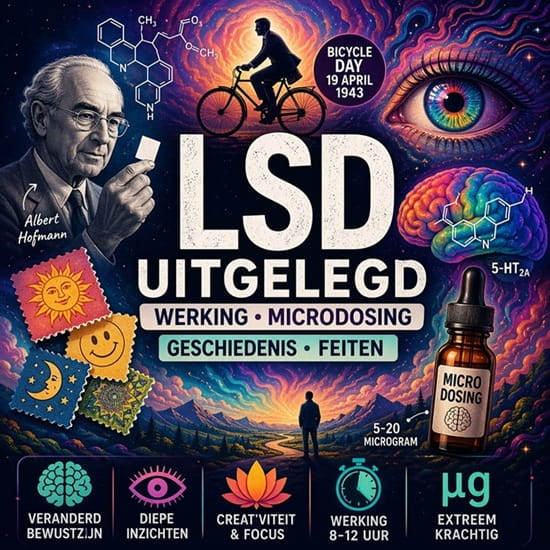
In direct, double-blind studies, there were a surprising number of similarities in the described effects of LSD and psilocybin at comparable intensities. One major difference is duration: LSD typically lasts considerably longer (8–12 hours), while a psilocybin experience often has a more compact timeline (4–6 hours). It is not necessarily less profound, but the timeline is different.
Why does a truffle trip feel more natural to some people?
Many people describe LSD as clear, electric, or analytical. Magic mushrooms and truffles are more often described as earthy, organic, emotional, or natural. However, these are descriptions of experiences that can vary greatly from person to person.
In blind studies, LSD and psilocybin appear remarkably similar when taken at comparable intensities. Dose, duration of effect, expectations, and environment likely account for a significant portion of the nature of the experience. In addition to psilocybin and psilocin, mushrooms also contain other natural compounds, but it has not yet been conclusively proven whether these have a noticeable effect on the human experience.
A truffle trip is more than just beautiful colors
People who have never taken psilocybin sometimes expect, above all, undulating walls, brighter light, and patterns behind closed eyes. All of that can happen, but the mental and emotional aspects can be much more impressive.
Thoughts can take unexpected turns; emotions can shift more quickly; music, nature, or interactions with other people can feel unusually intense. Some people experience a sense of connection, while others are confronted with difficult feelings or unresolved trauma. And sometimes it’s just incredibly funny.
It is precisely this breadth of experience that makes “truffles are a bit bland” too simplistic a summary.
(text continues below)
Test Your Knowledge of Truffles
Take the truffle quiz and receive a free bag of truffles with your order
Take the Microvibes truffle quiz and find out how much you know about magic truffles. At the end, you'll see your score right away, and a fun little gift will be waiting for you.
Set & setting: perhaps more important than the label
When it comes to psychedelics, it’s not just the substance that determines the course of the experience. “Set” refers to your inner state: your mood, expectations, thoughts, and how you feel physically and mentally. “Setting” refers to your surroundings: where you are, who is with you, and whether you feel safe there.
The same person can have a completely different experience with the same substance on two different days. A calm, familiar environment is usually a better choice than a busy or chaotic place. Especially if you have little experience, having a level-headed trip sitter can provide extra peace of mind. You’re not just taking a truffle with you on the trip; you’re taking yourself with you.
Why can truffles make you feel nauseous?
Nausea, an upset stomach, and sometimes abdominal pain are common. Psilocybin itself can cause nausea: this is frequently reported even in clinical trials using pure psilocybin, without truffle or mushroom tissue. In addition, your stomach naturally has to process the fungal material.
Mild nausea when waking up is a common, temporary reaction. Here are some tips that some people find helpful: avoid eating a large or greasy meal right before bed, drink some water slowly, get some fresh air, and breathe slowly if stress makes the nausea worse.
What if a trip suddenly gets intense?
Even experienced users can be caught off guard. If a trip becomes more intense than expected, a calm environment usually helps more than additional stimuli: less light, fewer people, soft music, and someone you trust can make a big difference.
Remind yourself that you are under the influence of a temporary substance and that the effects will wear off. Do not drive, participate in heavy traffic, or operate machinery. It is best not to combine psychedelics with alcohol or other drugs; such combinations make the experience less predictable.
Tip: Use our trip stopper to reduce unwanted strong effects.
When is it better to skip the truffles?
Just because magic truffles are legal doesn’t mean they’re a good idea for everyone or at any time. People who are prone to psychosis or have a history of psychotic symptoms are at increased risk. Also, if you’re mentally very unstable, a trip can intensify your feelings rather than ease them.
Use is not recommended during pregnancy and breastfeeding. If you are taking medication, this requires extra caution: there is little reliable research on many combinations with psychedelics, and some can be risky. Never stop or change your medication on your own to facilitate a trip; discuss any questions you may have with a doctor or expert.
Psilocybin as a medicine?
Scientific interest in psilocybin has grown enormously in recent years. Researchers are exploring, among other things, psilocybin-assisted therapy for depression and other psychiatric disorders. Some of the results are promising.
However, there is an important difference between clinical research and using magic truffles at home. In studies, participants are screened, prepared, and supervised, and they receive a precisely measured dose of psilocybin. A bag of magic truffles is not an antidepressant, and a psychedelic experience is not a substitute for professional treatment.
What about microdosing with truffles?
In addition to being used for full-blown psychedelic experiences, truffles are also used for microdosing: taking a small amount periodically, where the goal is not to have a distinct psychedelic experience. Many users report subtle changes in mood, focus, or creativity.
The science on this topic is not yet settled. In controlled studies, expectations sometimes play a significant role, and the results are not always clear-cut. Even when used for microdosing, truffles are a natural product, which makes it harder to standardize the amount of active ingredient. Curiosity is fine; grandiose promises are not.
Tip: Check out the microdosing truffle package.
Magic truffles are worth a second look
Maybe you’ve tried truffles before and hardly felt anything. Maybe you’ve never seriously considered them because LSD seemed more interesting to you. Or maybe you still see truffles as psychedelic “training wheels” for beginners.
That image can be set aside. Magic truffles are biologically fascinating structures of psychedelic fungi. They contain the same primary active compounds as magic mushrooms; their potency can vary considerably, and psilocybin can cause powerful changes in perception, emotions, and consciousness. They’re not better than LSD, but they’re not inferior either—just a different landscape.
How much do you know about magic truffles?
We're curious to know how many of these facts you already knew—and what perception psychedelic enthusiasts have of magic truffles. So take our Magic Truffle Knowledge Quiz and help us with our research.
During this promotion, after participating, you’ll receive a bag of magic truffles worth €17.50 as a free gift with your order. Maybe you already know everything; maybe there’s a whole world waiting underground that you’ve overlooked until now.
Sources for Editorial Use
These sources support the key biological, legal, and scientific facts presented in this article. This section may be removed prior to publication, if desired.
- Drug Info – Difference Between Magic Mushrooms and Truffles; How They Work, Effects, Risks, and Laws
- Court of Appeal of ’s-Hertogenbosch, ECLI:NL:GHSHE:2024:2147
- Holze et al. – Direct Comparison of LSD and Psilocybin
- Ley et al. – Comparative Acute Effects of Mescaline, LSD, and Psilocybin
- Mason et al. – Acute Adverse Effects of Therapeutic Doses of Psilocybin
- Lenz et al. – Pharmacological and Behavioral Effects of Tryptamines in Psilocybin-Containing Mushrooms
- Dutch Government – Parliamentary Questions on Sclerotia/Truffles
More blogs