

Updated 07/07/2026, reading time approx. 4 minutes
Is microdosing safe?
Microdosing often raises two questions: Is microdosing safe? And: Can microdosing be dangerous?
The honest answer is nuanced. For some people, microdosing feels accessible, subtle, and easy to incorporate into daily life. At the same time, microdosing is not without risks. It still involves psychoactive substances that can affect mood, perception, sleep, sensory processing, and mental sensitivity.
Whether microdosing is safe depends on several factors: your physical and mental health, any medications you’re taking, your susceptibility to anxiety or psychosis, the substance (psychedelic) in question, the context, and how your body and mind respond.
Microdosing is not a medical treatment, a substitute for therapy or medication, or a guarantee of a positive experience. Therefore, please view this page as a practical guide: what we know, what to be cautious about, and when microdosing is probably not a good idea.
Research on the safety of psychedelics
A great deal of research has been conducted on the health risks associated with the use of psilocybin (magic mushrooms, magic truffles), LSD, and other psychedelics. Virtually all studies indicate that there is little to no risk to mental or physical health.
To put the risks and harmfulness of psychedelics into perspective, the chart below compares these substances with everyday items such as alcohol and tobacco. The chart shows, on a scale of 0 to 100, the risk each substance poses to the user’s health and the risk of harm to those around them.
For example, in the Drug Harm Index (see chart below), alcohol scores significantly higher than LSD and psilocybin in terms of harm and risk.
When can microdosing be riskier?
Microdosing can be particularly risky in situations where you’re already under pressure. Be especially careful when:
- susceptibility to psychosis;
- schizophrenia or psychotic symptoms;
- bipolar tendencies or manic episodes;
- severe anxiety or panic attacks;
- severe depressive symptoms;
- suicidal thoughts;
- epilepsy or a predisposition to epileptic seizures;
- heart problems or serious physical symptoms;
- pregnancy or breastfeeding;
- use of antidepressants, antipsychotics, lithium, tramadol, MAO inhibitors, or other medications;
- periods of extreme stress, sleep deprivation, or emotional instability;
- treatment by a doctor, psychiatrist, therapist, or other healthcare provider.
If this applies to you, microdosing is not something you should experiment with on your own. Always discuss your situation with a qualified healthcare professional.
Possible side effects
A 2019 study involving 5,000 participants, led by the renowned psychologist and researcher Dr. James Fadiman, found that approximately 4% of people who microdose experience side effects or adverse effects (source: Might Microdosing Be Safe and Beneficial? An Initial Exploration).
Possible side effects or unpleasant experiences include, for example:
- restlessness or agitation;
- increased sensitivity;
- irritability;
- fatigue;
- headache;
- mood swings;
- physical tension;
- momentary confusion;
- tinnitus that is temporarily more noticeable;
- unexpected or unwanted changes in perception.
Sometimes the effects are subtle, and sometimes they’re more obvious than expected. That’s why it’s important to take the signs seriously and not push yourself too hard.
(text continues below)
Feel better with microdosing
Are you ready? Then start microdosing now.
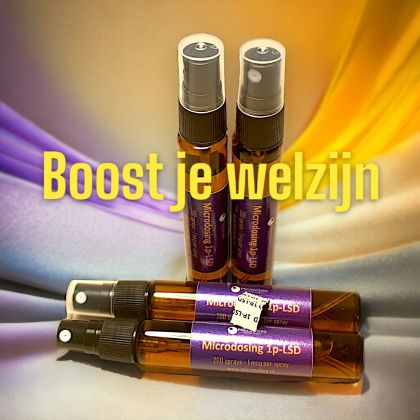
Our 1P-LSD Microdosing Kits consist of a spray bottle (10ml) containing 200mcg or 400mcg of 1P-LSD, instructions and a storage pouch in which you can store the spray bottle sealed. The bottle contains 200 sprays with 1mcg (normal) or 2mcg (strong) 1P-LSD per spray.
One bottle allows you to microdose for 2 to 3 months.
Microdosing and medication
Combining psychedelics with medication, alcohol, cannabis, stimulants, or other psychoactive substances can have unpredictable effects and increase the risks.
This is certainly true for antidepressants, antipsychotics, lithium, tramadol, MAO inhibitors, antiepileptic drugs, ADHD medications, strong pain medications, and drugs that affect mood, blood pressure, or the nervous system.
Are you taking any medications or other substances? Always discuss this with a doctor or healthcare provider. Never stop or change your prescribed medication on your own.
Microdosing and driving
Driving and microdosing is a sensitive topic. Even if a microdose feels subtle, your perception, reaction time, attention, or mood may be different than usual.
Do not drive a car, motorcycle, or operate heavy machinery if you notice that your reactions are different than usual. Be especially careful if you drive for work, are responsible for others, or work in an environment where concentration and quick reactions are important.
For more information, see the page on microdosing and driving.
Is microdosing with LSD safe?
Microdosing isn’t dangerous for everyone, but it can be risky in certain situations—especially if you’re dealing with mental health issues, are taking medication, have epilepsy, are under extreme stress, are sleep-deprived, or are in a chaotic environment.
The question is therefore not just:“Is microdosing dangerous?”
A better question is: for whom, in what situations, and under what circumstances can microdosing pose risks?
For some people, it is wiser not to start microdosing. For others, it may be especially important to first educate themselves thoroughly, take risks seriously, and not act on impulse or based on expectations.
More on the risks of microdosing
You can find more information about the risks of microdosing here:
Risks and Side Effects of Microdosing (Microdosing Institute)
Experience: Negative Effects During Microdosing (Microdosing Institute)
See also
Compare Microdosing Kits
Microdosing with magic truffles
Disclaimer
This article is intended to provide general information about microdosing, safety, risks, and side effects. Microvibes does not provide medical advice. Microdosing is not a proven treatment for mental or physical health issues and is not a substitute for professional help, therapy, or prescription medication.
Frequently Asked Questions
I suffer from psychosis, schizophrenia or other psychological symptoms. Can I microdose?
People with mental health disorders and a predisposition to conditions such as schizophrenia or psychosis should exercise extra caution when using psychedelics, including when microdosing. The use of psychedelics when experiencing mental health issues can have serious consequences.
Be sure to consult your primary care physician or healthcare professional before considering microdosing.
See also:
Microdosing for Mental Health IssuesI have epilepsy. Can I microdose safely?
The use of psychedelics in cases of epilepsy can have serious consequences. Psychedelics are known to trigger epileptic seizures.
Be sure to consult your primary care physician or healthcare professional before considering microdosing.
See also:
Microdosing and SafetyI have Tinnitus. Is this a risk with microdosing?
Tinnitus (ringing in the ears) may temporarily get worse, but this is not always the case. Personal experiences vary greatly.
What is known about microdosing in combination with other substances (drugs) or medications?
Combining psychedelics with medication, alcohol, cannabis, stimulants, or other psychoactive substances can have unpredictable effects and increase the risks.
This is certainly true for antidepressants, antipsychotics, lithium, tramadol, MAO inhibitors, antiepileptic drugs, ADHD medications, strong pain medications, and drugs that affect mood, blood pressure, or the nervous system.
Are you taking any medications or other substances? Always discuss this with a doctor or healthcare provider. Never stop or change your prescribed medication on your own.
See also:
Microdosing and Medication