

On this page, we’ll explore the combination of microdosing, meditation, breathwork, and yoga. What makes this combination interesting? Why do some people find that meditation or yoga provides a good foundation for microdosing? And what should you keep in mind when working with your breath, body, and consciousness?
Why microdosing is often associated with meditation, breathwork, and yoga
Many people describe microdosing as a subtle experience. It’s not a major breakthrough, but rather a slight shift in focus, mood, creativity, or self-reflection. That’s precisely why microdosing is often associated with practices that help you slow down and reconnect with yourself.
Meditation, breathwork, and yoga provide a foundation for microdosing. They ensure that you not only experience something, but also continue to pay attention to what’s happening: which thoughts resurface, where you’re holding tension, how your mood shifts, and how you respond to what you’re feeling.
This gives microdosing more direction and depth. You notice something, pause for a moment, and give it some space before the day rushes on.
For many people, that's where the value lies: not doing more, but listening better.
Microdosing and meditation
Meditation and microdosing are often mentioned together because they both revolve around mindfulness. Meditation brings you back to what’s happening right now: your breath, your body, your thoughts, sounds, and feelings.
Many people find that meditation combined with microdosing feels more natural or gentler. Thoughts are still there, but they sometimes feel less overwhelming. A little more space can open up between what you think and how you react to it.
That means meditation isn’t just a trick to help you calm down. Sometimes you actually notice more: restlessness, fatigue, tension, resistance, or emotion. That can be confrontational, but also enlightening. You gain a clearer view of what normally remains just below the surface.
A simple meditation is often best. Sit quietly. Follow your breath. Feel your body. Notice sounds. Don’t intervene, don’t control, and don’t try to reach a special state.
Microdosing and breathwork
Breathwork can have a profound effect on your body and consciousness. Even without microdosing, breathwork can be relaxing, energizing, or emotionally intense. That’s why this combination requires the most attention.
Breath awareness often goes well with microdosing. Think about slowing down, feeling how your breath moves on its own, noticing tension in your abdomen or chest, or simply doing nothing but breathing for a few minutes.
More intensive breathwork is a different matter. Rapid breathing, deep connected breathing, holotropic breathwork, or powerful Wim Hof-style sessions can bring physical sensations and emotions to the surface. When combined with microdosing, this can be too much for some people.
That is why the difference is important:
Breath awareness helps you slow down.
Intensive breathwork can open, activate, or disrupt.
If you’re combining microdosing with breathwork, it’s best not to dive right in. The power often lies not in breathing harder, but in becoming more attuned to what’s already happening.
Microdosing and yoga
Yoga brings your attention to your body. That makes it a good practice for many people to combine with microdosing. While meditation is still, yoga lets you feel—through movement—tension, breathing space, resistance, and balance.
Many people find that yoga combined with microdosing is a way to connect more deeply with their bodies.
Gentle forms of yoga are usually a better fit here than intense physical training. Think of yin yoga, restorative yoga, slow flow, or simple poses that focus primarily on breath and mindfulness.
The yoga mat then becomes not a place to achieve something. It becomes a place where you encounter yourself.
Are you impatient?
Do you want to force things?
Are you holding onto tension?
Can you relax without losing your focus?
(text continues below)
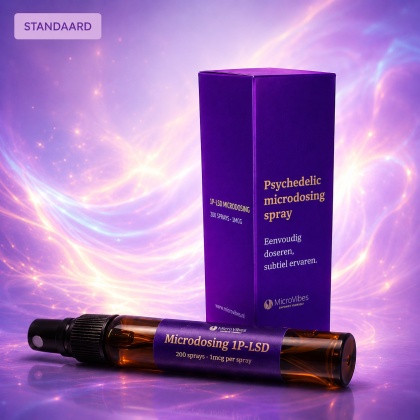
Feel better with microdosing
Are you ready? Then start microdosing now.
Our 1P-LSD Microdosing Kits consist of a spray bottle (10ml) containing 200mcg or 400mcg of 1P-LSD, instructions and a storage pouch in which you can store the spray bottle sealed. The bottle contains 200 sprays with 1mcg (normal) or 2mcg (strong) 1P-LSD per spray.
One bottle allows you to microdose for 2 to 3 months.

Intent: Direction Without Pressure
Many people approach microdosing with an intention. It doesn't have to be anything grand or spiritual. An intention isn't a command you give yourself, but a direction you want to move toward.
For example:
“I want to listen more carefully today.”
“I want to feel where I’m holding tension.”
“I want to respond more calmly.”
“I want to live less on autopilot.”
“I want to make room for creativity.”
“I want to be more honest about what I need.”
An intention is not meant to be a means of pressure. You don't have to force anything; you're simply reminding yourself where to direct your attention.
That’s important, because high expectations often make microdosing more difficult than it needs to be. Those looking for spectacular effects miss the subtle signs: a gentler reaction, a clearer sense of awareness, a different pace, a thought that’s less fixed.
Don't direct.
Don't force.
Be present.
Microdosing and Mindfulness
Mindfulness sounds gentle, but in practice it can be quite direct. You observe what is there, without immediately turning away.
That aligns with how many people describe microdosing: taking a more subtle look at thoughts, feelings, and physical signals.
Many stories about microdosing focus on the mind: focus, creativity, mood, clarity. But stress isn’t just in your head—it’s often in your body, too. Tension often manifests in your jaws, shoulders, abdomen, breathing, or posture.
The combination of microdosing and mindfulness helps reveal which thoughts or themes are linked to tension in the body.
What should you keep in mind?
Combining microdosing with meditation, breathwork, or yoga may sound gentle, but it can still trigger a lot of emotions. It’s precisely these practices that bring you inward that can reveal tension, emotions, or fatigue and bring them to the surface.
A few points to keep in mind:
- Keep it simple and organized;
- It's better to choose duration over intensity;
- Be careful with deep or rapid breathing techniques;
- Don't plan a day that's too packed;
- Take your body's signals seriously;
- Be especially careful if you are prone to panic, have mental health issues, are taking medication, or are under severe stress;
- Do not drive or operate machinery if you notice that you are reacting differently than usual.
Meditation, breathwork, and yoga are no guarantee of peace or relaxation. Sometimes, in fact, they bring to the surface exactly what needs attention.
If you want to combine microdosing with meditation, yoga or breathwork, it is important to do so carefully and with respect for yourself. The combination can be powerful, but requires awareness and a safe approach.
Start with a low dose:
Stick to your normal microdosing amount and never go higher, especially if you are just starting out with this combination. Microdosing works subtly and takes time to build up. Too high a dose can actually throw you off balance or make the session overwhelming.
Choose one exercise at a time:
Meditation, yoga and breathwork each have their own unique impact on the body and mind. Doing everything at once can overstimulate yourself and make it harder to really feel what's happening. Therefore, choose one practice per microdosing day so you can properly observe and integrate the effects.
Create a safe setting:
Make sure you have a quiet place where you will not be disturbed and where you can fully relax. This can be at home, in a studio or in nature, as long as you feel comfortable and safe there. Have everything you need ready in advance - a mat, water, a blanket - so you don't have to think about anything during the session. Afterwards, schedule plenty of time for integration, such as taking a walk or writing about your experience.
Be gentle with yourself:
Microdosing can subtly bring up old emotions or unprocessed experiences, especially when combined with deep inner work. Give yourself space to feel through this without judgment. It is normal to experience discomfort or unexpected emotions at times. Don't force anything and take breaks when necessary.
By building your sessions in this way, you create a safe foundation to fully experience the benefits of microdosing and your inner work. You will find that your inner work becomes deeper and deeper, while at the same time staying with yourself with compassion and peace.
Which practice is the best fit?
There is no perfect combination. Some people find meditation relaxing. Others find relaxation through walking, yoga, breath awareness, music, or writing.
Best practices are usually not the most extraordinary ones, but the most feasible ones. Something you can return to without it becoming too big or complicated.
Consider:
A quiet morning.
Ten minutes of silence.
A walk without your phone.
A few gentle yoga poses.
A breath you don’t have to control.
Three sentences in a journal.
A moment when you don’t react right away.
For many people, microdosing becomes more meaningful when it isn't just something done on a whim, but is connected to mindfulness, intention, and integration.
Frequently Asked Questions About Microdosing, Meditation, Breathwork, and Yoga
Can you combine microdosing with meditation?
Microdosing and meditation are often mentioned together because both involve mindfulness, observation, and self-reflection. Many people find meditation to be a peaceful way to reflect on what they notice.
Why do people combine microdosing with yoga?
Yoga combines breathing, movement, and body awareness. Some people find it to be a suitable practice to complement microdosing, especially when the focus is on slowing down, being present, and letting go of the need to perform.
What is the difference between "ademwerk" and "breathwork"?
"Ademwerk" is the Dutch term for "breathwork." It can range from simple breath observation to more intensive techniques. Intensive breathwork, in particular, can have a profound physical and emotional impact.
Is microdosing combined with breathwork always a good idea?
Not always. Intensive breathing techniques can be powerful on their own. Anyone who is prone to panic, hyperventilation, dizziness, or strong emotional reactions should exercise caution.
What does "integration" mean in the context of microdosing?
Integration means looking back at what you've noticed and deciding what you want to do with it. You can do this through writing, walking, taking a break, talking, or reflection.
What is a good microdosing practice?
A good practice is calm, personal, and achievable. For some people, that means meditation; for others, yoga, breath awareness, walking, or journaling. The most important thing is that it creates space for mindfulness.
More about microdosing
Introduction to Microdosing
What Is Microdosing
What Are Psychedelics
How do psychedelics work, and how does microdosing work?
What are the benefits of microdosing
Is microdosing safe
Is microdosing legal
Experiences with microdosing
Videos about microdosing and psychedelics
Frequently Asked Questions
👉 Want to try microdosing?
Check out our microdosing products hereand find out what works best for you.